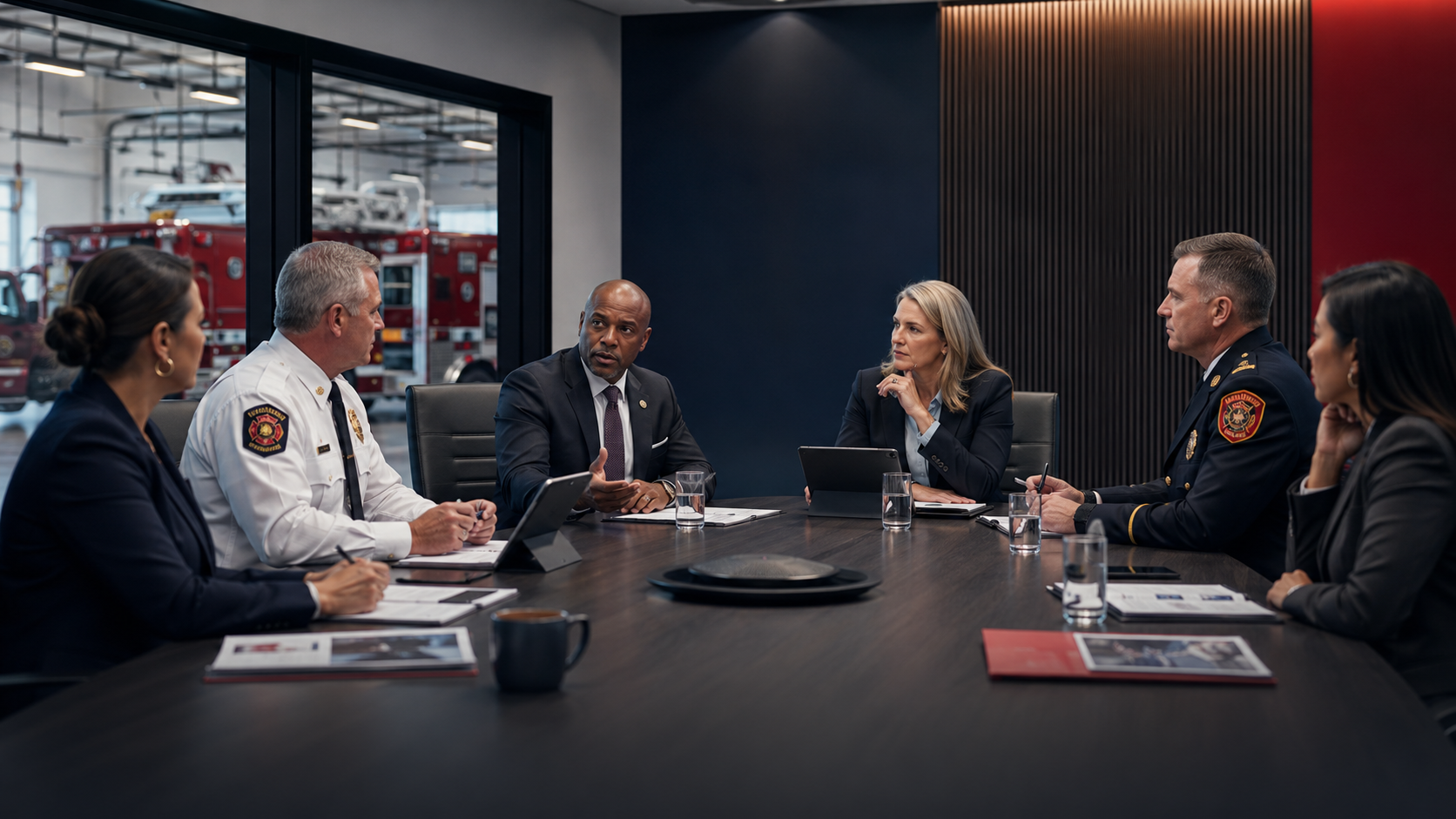
Board Members & Governing Bodies: Governing with Clarity, Trust, and Purpose
Strong public safety organizations depend on governing bodies that understand their role, support the mission, exercise responsible oversight, and build productive relationships with executive leadership.
Effective governance is not about managing daily operations. It is about setting direction, protecting public trust, asking the right questions, supporting executive leadership, making informed decisions, and holding the organization accountable to its mission, values, policies, and long-term priorities.
Role
Governance
Focus
Oversight and Direction
Risk
Role Confusion
Goal
Board-Chief Alignment
Good Governance Creates Stability, Trust, and Strategic Direction
Governing bodies carry significant responsibility. Their decisions influence funding, policy, public trust, executive leadership, organizational priorities, accountability, and long-term service delivery.
Boards Govern Best When They Understand the Difference Between Oversight and Operations
Strong boards provide direction, oversight, support, accountability, and strategic perspective. They do not need to manage every operational decision to be effective. The healthiest organizations have clear boundaries between governance, management, and operations.
- Clear governance roles reduce friction between boards and executive leaders
- Strong oversight protects public trust and organizational credibility
- Productive board-chief relationships improve decision-making and stability
- Good governance supports better policy, planning, budgeting, and accountability
- Board alignment helps organizations stay focused on mission and priorities
- Role clarity prevents governing bodies from drifting into operational management
Understanding the Difference Between Board Work and Staff Work
One of the most common sources of friction is role confusion. Boards are responsible for governance and oversight, while executive leaders are responsible for management and operations.
Governance Sets Direction
Governing bodies establish mission, policy, priorities, oversight expectations, fiscal direction, and long-term organizational accountability.
Management Executes Direction
Executive leaders translate board direction into staffing, operations, programs, supervision, service delivery, and daily organizational management.
Operations Deliver the Mission
Personnel, officers, supervisors, and operational teams carry out the work of the organization through established systems and leadership.
Boards Ask Strategic Questions
Effective boards ask questions about risk, readiness, funding, performance, priorities, policy, sustainability, and public accountability.
Leaders Need Room to Lead
Chiefs, directors, and executive leaders need clear expectations and appropriate authority to manage people, systems, and operations.
Alignment Requires Discipline
Governance works best when roles, reporting, communication, decision-making, and expectations are clearly defined and consistently honored.
What Strong Governing Bodies Focus On
Strong boards do not need to control everything. They need to focus on the responsibilities that only governing bodies can fulfill.
Mission and Direction
Clarify the organization’s purpose, long-term priorities, service expectations, and public value.
Policy Oversight
Establish and review policies that guide ethical, legal, financial, and organizational decision-making.
Financial Stewardship
Provide responsible oversight of budgets, funding, sustainability, major expenditures, and long-term financial planning.
Executive Support and Accountability
Support the chief, director, or executive leader while also holding that leader accountable to clear expectations.
Strategic Planning
Help establish long-term direction, measurable priorities, implementation expectations, and accountability for progress.
Public Trust
Govern with transparency, professionalism, ethical discipline, and accountability to the community or stakeholders served.
Risk Awareness
Understand major organizational risks related to staffing, service delivery, funding, compliance, reputation, and readiness.
Board Development
Invest in orientation, education, governance practices, meeting discipline, and continuous board improvement.
Healthy Governance Depends on Trust and Role Clarity
Productive alignment between the governing body and executive leadership is one of the strongest indicators of organizational stability.
Clear Expectations
Boards and executive leaders should define what success looks like, how progress will be measured, and how concerns will be communicated.
Defined Decision Rights
Everyone should understand which decisions belong to the board, which belong to executive leadership, and which require collaboration.
Consistent Communication
A predictable reporting and communication rhythm reduces surprises, rumors, assumptions, and unnecessary conflict.
Professional Meetings
Board meetings should be structured, prepared, respectful, mission-focused, and guided by policy and purpose.
Mutual Respect
Governing bodies and executive leaders must respect each other’s role, responsibility, expertise, and accountability.
Strategic Focus
Boards add value when they stay focused on policy, priorities, resources, risk, governance, and long-term direction.
Mistakes That Create Board-Chief Friction
Most governance problems do not begin with bad intent. They often begin when roles are unclear, communication is inconsistent, or boundaries between governance and management are not respected.
- Confusing governance oversight with daily operational management.
- Giving direction to staff outside the executive leadership structure.
- Evaluating the chief or executive leader without clear expectations or measurable priorities.
- Allowing personal agendas, politics, or individual board member preferences to override the mission.
- Failing to provide clear policy direction before criticizing management decisions.
- Using board meetings to manage minor operational issues instead of strategic governance matters.
- Expecting executive leaders to lead effectively without appropriate authority or support.
- Failing to onboard new board members into their legal, ethical, strategic, and governance responsibilities.
- Allowing informal conversations to replace transparent, disciplined board processes.
- Waiting until conflict occurs before investing in board development and alignment.
Governance Development and Advisory Support for Public Safety Leaders
First Due Leadership Consulting helps boards, governing bodies, chiefs, executive leaders, and public safety organizations strengthen governance practices, clarify roles, improve communication, and build healthier board-chief alignment.
Board & Governing Body Development
Practical development for governing bodies focused on role clarity, governance practices, meeting discipline, decision-making, and executive alignment.
View ServiceLeadership & Governance Advisory
Strategic advisory support for chiefs, boards, executive leaders, and public safety organizations working through governance, accountability, and leadership challenges.
View ServiceStrategic Planning & Facilitation
Facilitation support to help boards and executive leaders clarify mission, priorities, goals, accountability measures, and long-term organizational direction.
View ServiceBoard-Chief Alignment Workshop
A custom workshop designed to help governing bodies and executive leaders clarify roles, improve communication, reset expectations, and strengthen trust.
Schedule a ConsultationGovern with Clarity Before Conflict Takes Over
Strong governance does not happen by accident. First Due Leadership Consulting can help your board, governing body, and executive leadership team clarify roles, strengthen communication, improve alignment, and make better decisions in service of the mission.
Request a Consultation