
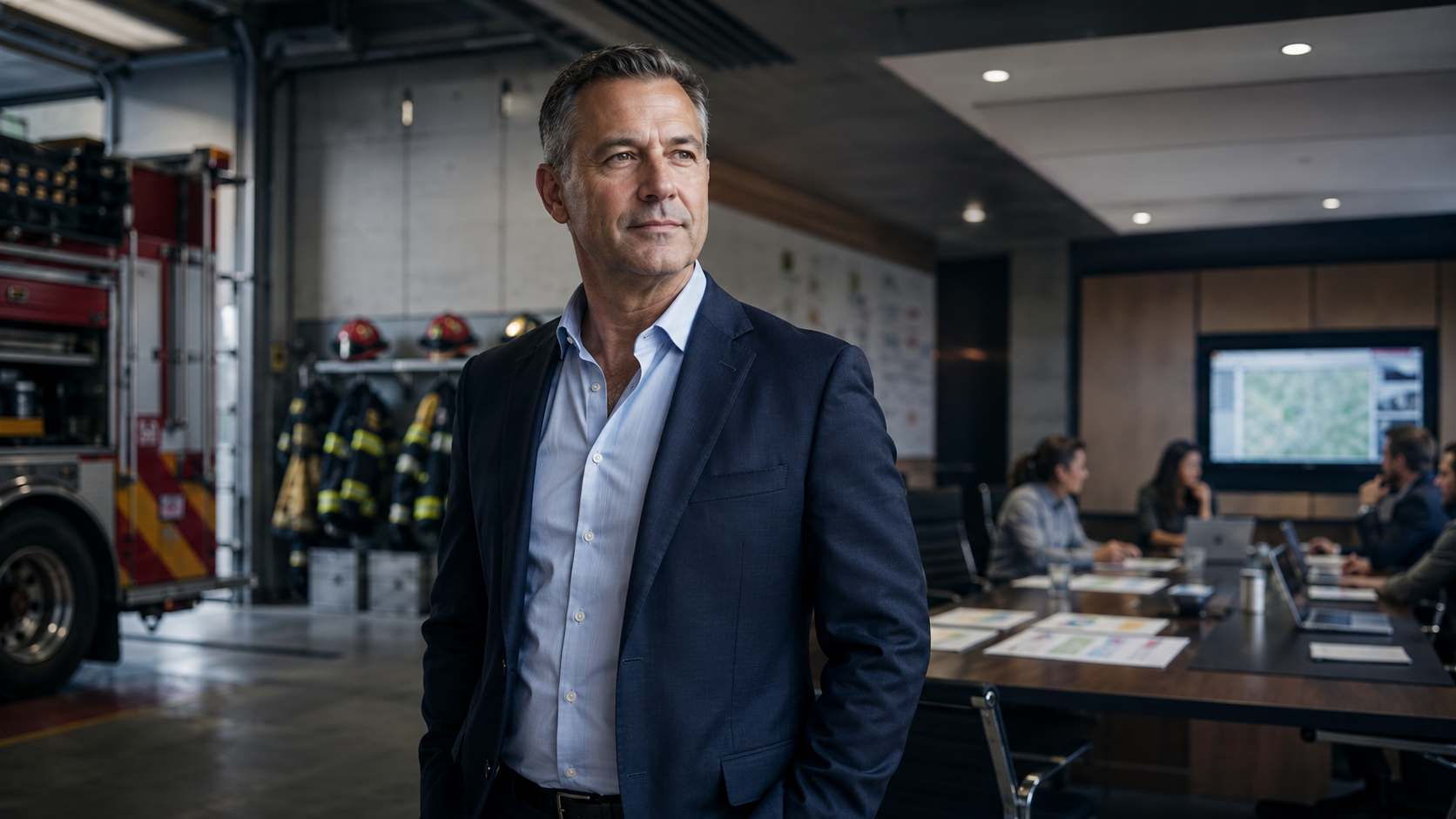
From the Fireground to the Boardroom: Leadership Lessons for High-Consequence Environments
Fire service leadership is built in environments where trust matters, communication must be clear, decisions carry consequences, and teams depend on disciplined leadership under pressure.
Those same principles apply in boardrooms, businesses, government agencies, nonprofit organizations, public safety agencies, and any environment where leaders are responsible for people, performance, culture, accountability, and results.
Origin
Fireground Leadership
Application
Boardroom Decisions
Focus
Trust and Accountability
Outcome
Confident Leadership
The Environment Changes. The Leadership Principles Still Apply.
The fireground and the boardroom may look different, but both require leaders who can remain calm, communicate clearly, build trust, understand risk, hold standards, adapt to changing conditions, and develop people before the next challenge arrives.
Leadership Tested Under Pressure Transfers to Every Mission-Driven Environment
Fire service leadership provides a practical model for leading people when the stakes are real. The lessons are not theoretical. They are grounded in preparation, discipline, communication, teamwork, accountability, resilience, and trust.
- Leaders must model the standards they expect from others
- Clear communication matters most when pressure increases
- Accountability protects people, performance, and trust
- Teams perform better when roles, expectations, and priorities are clear
- Adaptability is essential when conditions change quickly
- Integrity remains the foundation of sustainable leadership credibility
Fire Service Leadership Principles That Work Anywhere
These principles translate from the firehouse and fireground into corporate, public-sector, nonprofit, association, and executive leadership environments.
Lead by Example
Fireground Lesson Fire officers know their actions speak louder than their words. Crews watch what leaders do under pressure.
Boardroom Application Leaders establish credibility by modeling the work ethic, professionalism, humility, discipline, and integrity they expect from others.
Make Decisions Under Pressure
Fireground Lesson Emergency scenes require leaders to assess conditions, make decisions, communicate direction, and adjust as new information appears.
Boardroom Application Business, public-sector, and executive leaders must make timely decisions even when information is incomplete and the stakes are high.
Maintain Situational Awareness
Fireground Lesson Fire officers constantly scan the environment for hazards, changing conditions, resource needs, and crew safety concerns.
Boardroom Application Leaders must understand the operating environment, team dynamics, stakeholder expectations, risks, opportunities, and emerging challenges.
Build Strong Teams
Fireground Lesson Firefighting is a team effort. Individual skill matters, but coordinated performance determines the outcome.
Boardroom Application Strong leaders build teams through trust, clear roles, shared expectations, collaboration, honest feedback, and mutual accountability.
Create Accountability
Fireground Lesson Standards matter because lives, safety, performance, and trust depend on disciplined follow-through.
Boardroom Application Accountability is not punishment. It is the leadership system that clarifies expectations, reinforces standards, and protects team performance.
Adapt When Conditions Change
Fireground Lesson Fireground conditions can change rapidly. Leaders must adapt without losing sight of the mission.
Boardroom Application Organizations face changing markets, staffing realities, political environments, customer expectations, and operational demands.
Develop Resilience
Fireground Lesson Public safety professionals face stress, setbacks, difficult calls, fatigue, and repeated challenges.
Boardroom Application Leaders need resilience to navigate failure, conflict, criticism, uncertainty, organizational change, and long-term pressure.
Mentor Future Leaders
Fireground Lesson Experienced officers are responsible for developing the next generation before leadership gaps appear.
Boardroom Application Organizations become stronger when leaders coach, mentor, delegate, develop talent, and prepare people for greater responsibility.
Commit to Continuous Learning
Fireground Lesson Fire service professionals train constantly because conditions, tactics, tools, standards, and risks evolve.
Boardroom Application Leaders must remain curious, coachable, informed, and willing to grow as their organizations and environments change.
Lead with Integrity
Fireground Lesson Trust is essential in public safety. Leaders must be honest, consistent, ethical, and worthy of responsibility.
Boardroom Application Integrity builds long-term credibility. Leaders must make decisions that align with values, mission, people, and public trust.
Fireground Leadership Principles for Every Leadership Environment
The value of these principles is not limited to fire departments. They apply anywhere leaders must build trust, manage pressure, create accountability, and help teams perform.
Fire, EMS, and Emergency Services Leaders
Strengthen officer development, command staff alignment, accountability, communication, culture, and team performance.
Managers and Executives
Apply high-consequence leadership lessons to decision-making, team development, communication, accountability, and trust.
Public-Sector Leaders
Lead through competing priorities, stakeholder expectations, limited resources, governance dynamics, and public accountability.
Mission-Driven Organizations
Build leadership habits that strengthen purpose, accountability, collaboration, volunteer engagement, and organizational trust.
Boards and Governing Bodies
Improve governance, oversight, strategic discipline, executive support, and alignment around mission and public value.
Supervisors and Team Leaders
Develop practical leadership habits for leading people, handling conflict, setting expectations, and improving performance.
How to Bring Fireground Leadership into the Boardroom
Translating public safety leadership into other environments requires more than telling stories. It requires turning hard-earned lessons into repeatable leadership habits.
Clarify the Mission
Before making decisions, leaders must understand what matters most, who is affected, and what success looks like.
Communicate the Standard
People cannot meet expectations that remain vague. Strong leaders define priorities, roles, and non-negotiables.
Build Trust Before Pressure
Trust cannot be manufactured during crisis. It is built through consistency, competence, care, and follow-through.
Train Before the Moment
Teams perform better under pressure when expectations, decision-making, communication, and accountability are practiced early.
Review and Improve
Strong organizations learn from experience through honest review, feedback, reflection, and practical improvement.
Develop the Next Leader
Leadership is not complete until others are prepared to carry the mission forward.
Continue Building Practical Leadership Capacity
These related pages expand on the leadership principles found in this resource and connect them to practical application.
Leadership Accountability
Practical guidance for setting expectations, reinforcing standards, building trust, and improving team performance.
View ResourceDifficult Conversations
Guidance for leaders who need to address performance concerns, conflict, feedback, and missed expectations.
View ResourceCorporate Leaders
Leadership lessons from the firehouse for managers, executives, organizations, and high-performing teams.
View PagePublic Safety Speaking & Workshops
Keynotes, conference sessions, and workshops built around practical leadership, trust, accountability, and culture.
Book a SessionBring Fireground Leadership Principles into Your Organization
First Due Leadership Consulting helps public safety, corporate, government, nonprofit, and mission-driven organizations apply practical leadership principles that build trust, accountability, culture, communication, and performance.
Request a Consultation