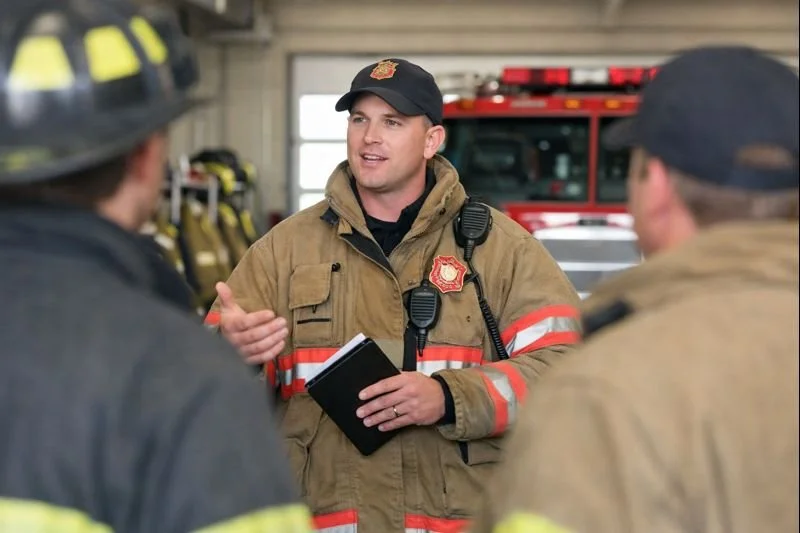
Newly Promoted Officers: Leadership Essentials for Success
Promotion is one of the most important transitions in a public safety career. Overnight, expectations change, relationships shift, decisions carry more weight, and your success is measured less by what you personally do and more by how your team performs.
This page is designed to help newly promoted fire and EMS officers understand what changes after promotion, avoid common early mistakes, and build the leadership habits needed for long-term credibility, trust, and performance.
Audience
New Officers
Focus
Transition to Leadership
Challenge
Leading Former Peers
Goal
Credibility & Trust
Navigating the Shift from Peer to Leader
The transition into an officer role is not just a change in title. It is a change in responsibility, expectations, visibility, and influence.
Technical Skill Got You Promoted. Leadership Skill Helps You Succeed.
Most officers are promoted because they are dependable, competent, and respected. But the officer role requires a new set of skills: communicating expectations, leading former peers, making difficult decisions, documenting performance, managing conflict, and developing others.
- Relationships change when you move from crew member to officer
- Your words, decisions, habits, and attitude carry more weight
- You become responsible for expectations, performance, and follow-through
- You must balance trust, fairness, accountability, and operational readiness
- You are now developing others, not just completing your own tasks
The Officer Role Changes How You Are Evaluated
Newly promoted officers are no longer evaluated solely on individual performance. They are evaluated on leadership impact, crew performance, decision-making, communication, and accountability.
You Lead Former Peers
The people who were once your equals may now look to you for direction, correction, decisions, and accountability.
You Set the Standard
Your habits, attitude, language, preparation, and professionalism become the example others will follow.
You Make Difficult Decisions
Leadership requires making decisions that may not be popular but are necessary for safety, trust, performance, and mission success.
You Manage Conflict
Avoiding conflict allows problems to grow. Officers must learn how to address issues early, respectfully, and professionally.
You Own Accountability
Accountability is no longer someone else’s responsibility. You must communicate expectations, reinforce standards, and follow through.
You Develop the Team
The officer’s job includes coaching, mentoring, training, correcting, and preparing others for future responsibility.
Essential Skills for New Officers
The first 12 to 24 months after promotion are critical. The habits built during this period often define an officer’s leadership reputation for years.
Ownership and Accountability
Your decisions, actions, and behavior now set the tone. Accountability begins with the officer.
Communication and Expectation Setting
Clear expectations prevent many leadership problems before they start.
Leading Former Peers
Respect is earned through consistency, fairness, professionalism, and follow-through.
Emotional Intelligence
Understanding people, stress, motivation, and conflict is as important as technical skill.
Decision-Making Under Pressure
New officers must learn when to act decisively, when to seek input, and how to own the outcome.
Conflict Management
Avoiding conflict creates bigger problems. Officers must address issues early and professionally.
Team Development
Leadership includes developing others, coaching performance, and building stronger teams.
Safety Leadership
Safety culture is reinforced by what officers tolerate, correct, model, and reward.
Time and Priority Management
Administrative responsibilities increase quickly after promotion. Officers must learn to manage competing demands.
Continuous Learning
The most effective officers stay curious, reflective, coachable, and committed to growth.
What New Officers Should Focus on Early
The first few months after promotion set the foundation for credibility. New officers do not need to change everything immediately. They need to listen, clarify, communicate, and lead consistently.
Listen Before Changing Everything
Understand the team, culture, expectations, strengths, frustrations, and informal norms before making major changes.
Clarify Expectations
Talk with your supervisor and team about priorities, standards, communication, decision-making, and accountability.
Establish Leadership Rhythm
Build consistent habits for briefings, follow-up, documentation, feedback, preparation, and crew development.
Build Trust Through Consistency
Trust grows when your actions match your words and people know what to expect from you.
Address Small Issues Early
Small issues become large problems when officers avoid them. Coach early, document clearly, and follow up.
Ask for Coaching
New officers should seek feedback from trusted leaders, mentors, and supervisors before problems become patterns.
Leadership Problems to Avoid
Most newly promoted officers do not fail because they lack talent. They struggle because the leadership transition is harder than expected and they do not receive enough preparation or support.
- Trying too hard to remain “one of the crew” instead of accepting the responsibility of leadership.
- Relying on rank, title, or authority instead of building credibility through consistency.
- Avoiding difficult conversations until small problems become major issues.
- Changing too much too quickly without listening, understanding, or explaining why.
- Failing to document performance concerns, coaching conversations, or follow-up actions.
- Overcompensating with harshness because of insecurity or fear of not being respected.
- Assuming technical competence automatically creates leadership competence.
Structured Support for New Officer Success
First Due Leadership Consulting helps fire, EMS, and public safety organizations prepare newly promoted, current, and aspiring officers for real leadership responsibility.
Fire Officer Development Program
A practical leadership and operational development program for newly promoted, current, and aspiring fire officers.
View ProgramEMS Leadership Excellence Program
A practical EMS leadership program for current, newly promoted, and aspiring EMS leaders and supervisors.
Discuss ELEPFirst 90 Leadership Integration
Support for newly promoted or newly appointed leaders as they build trust, clarify expectations, align teams, and create early momentum.
Request SupportDepartment-Based Officer Development
Custom leadership workshops, officer development programs, coaching, and facilitation designed around your agency’s needs.
Schedule a ConsultationPromotion Is a Milestone, Not the Finish Line
Newly promoted officers need more than congratulations. They need expectations, coaching, accountability, leadership tools, and a structured path for growth. First Due Leadership Consulting can help your organization prepare officers to lead with confidence.
Request a Consultation